Buy asht.eu ?
We are moving the project
asht.eu .
Are you interested in purchasing the domain
asht.eu ?
domain@kv-gmbh.de · 0541-91531010
Buy asht.eu ?
What is the difference between damping factor and damping mass?
Damping factor is a measure of how effectively a system can dissipate energy, and it is typically represented as a ratio of the actual damping in a system to the critical damping. Damping mass, on the other hand, refers to the mass that is used to dissipate energy in a system, such as in a vibration damping system. In other words, damping factor is a measure of the effectiveness of the damping in a system, while damping mass is the physical mass that is used to provide damping in a system. **
What is the damping factor?
The damping factor is a parameter used in engineering and physics to describe the rate at which oscillations in a system decay over time. It is a measure of how quickly the system returns to equilibrium after being disturbed. A higher damping factor indicates faster decay of oscillations, leading to a quicker stabilization of the system. In contrast, a lower damping factor results in slower decay of oscillations, potentially leading to prolonged oscillations or even instability in the system. **


Similar search terms for Damping
Top-Angebote
Products related to Damping:
-
Sesderma Reti Age 5 Liposomal Serum Anti-Aging Innovation 30mLA facial serum for wrinkles and signs of ageing. Reduces wrinkles and fine lines. Hydrates and strengthens barrier. Restores youthful radiance. 5-Retinoid System: smooths wrinkles, accelerates renewal, and boosts collagen. Biomimetic Peptides: fill expression lines by stimulating collagen synthesis.54,51 £*Shipping: 5,34 £Secure redirect to the provider
-
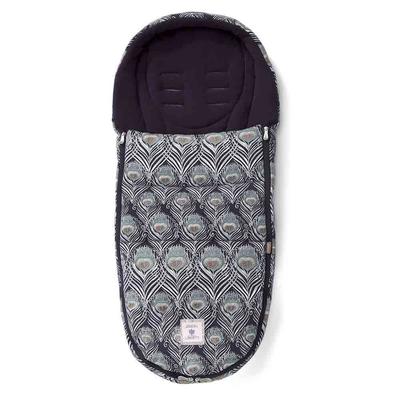
Mamas & Papas Special Edition Liberty Collaboration Cold Weather Plus FootmuffThe Cold Weather Plus Footmuff by Mamas & Papas is the ultimate footmuff for cold weather protection, and features an extra-soft fleece lining. Ideal for keeping baby warm and cozy when out and about in cool weather, you can even zip down to a liner...150,00 $*Shipping: 0,00 $Secure redirect to the provider



-
How do you calculate the damping factor?
The damping factor can be calculated by dividing the actual damping coefficient of a system by the critical damping coefficient. The critical damping coefficient is calculated by multiplying the mass of the system by the square root of the spring constant. Once you have both values, you can divide the actual damping coefficient by the critical damping coefficient to determine the damping factor of the system. A damping factor greater than 1 indicates an overdamped system, a factor of 1 represents critical damping, and a factor less than 1 signifies an underdamped system. **
-
When does the damping ratio apply to vibrations?
The damping ratio applies to vibrations when there is damping present in the system. Damping is a force that opposes the motion of the vibrating system, causing the amplitude of the vibrations to decrease over time. The damping ratio is a measure of how quickly the vibrations in the system decay. A higher damping ratio indicates faster decay of vibrations, while a lower damping ratio indicates slower decay. **
-
What unit does damping have in harmonic oscillation?
Damping in harmonic oscillation is typically measured in units of velocity per unit of displacement, or in units of force per unit of velocity. This is because damping represents the rate at which the oscillation's energy is dissipated, which can be quantified in terms of the velocity or force acting on the oscillating system. Therefore, the unit of damping depends on the specific context and the physical quantities involved in the oscillation. **
-
What is the difference between damping and suspension?
Damping refers to the process of controlling the oscillations and vibrations in a vehicle by dissipating the kinetic energy. This is typically achieved through the use of shock absorbers or dampers. On the other hand, suspension refers to the system that supports the vehicle and its load, providing a smooth and controlled ride over uneven surfaces. The suspension system includes components such as springs, struts, and control arms, which work together to absorb shocks and maintain stability. In summary, damping is a specific aspect of the suspension system that focuses on controlling vibrations and oscillations, while suspension encompasses the entire system that supports the vehicle and provides a comfortable ride. **


What is a frequency-dependent damping multiswitch by Kathrein?
A frequency-dependent damping multiswitch by Kathrein is a device used in satellite and cable TV systems to distribute signals to multiple receivers. It is designed to minimize signal loss and interference by adjusting the damping level based on the frequency of the signal being transmitted. This helps to ensure that each receiver receives a strong and clear signal, improving overall system performance. The multiswitch is a crucial component in ensuring reliable and high-quality signal distribution in multi-dwelling units or commercial buildings. **
How do you calculate the damping in a simple pendulum?
The damping in a simple pendulum can be calculated by measuring the decrease in amplitude of the pendulum's oscillations over time. This can be done by recording the amplitude of the pendulum's swing at regular intervals and plotting a graph of amplitude against time. The damping can then be determined by fitting an exponential decay curve to the data and calculating the damping coefficient from the curve's equation. Another method is to measure the period of the pendulum's oscillations and observe how it changes over time, as the damping will cause the period to increase. **
Top-Angebote
Products related to Damping:
-
Vermilion Dale Carnegie Personal Development Collection – 6 Book Set Self-Help, Communication & Success ClassicsDale Carnegie Personal Development Collection 6 Books Set Transform your mindset, confidence, and communication skills with the Dale Carnegie Personal Development – 6 Books Collection Set by Dale Carnegie. This powerful collection brings together some of Carnegie’s most influential works on success, relationships, leadership, and personal growth. Known for his timeless principles and practical advice, Carnegie’s teachings have helped millions of readers improve their confidence, build meaningful relationships, and achieve their goals. Perfect for professionals, students, entrepreneurs, and anyone looking to grow personally and professionally, this set offers a complete guide to mastering communication and success. Why Readers Love This Collection: Includes 6 bestselling personal development books Timeless advice on communication, confidence, and leadership Easy-to-understand, practical strategies Ideal for beginners and experienced readers Perfect for self-improvement and career growth A must-have for anyone serious about personal development, the Dale Carnegie Collection delivers proven principles for success in life and work. Description How to Develop Self-confidence and Influence People by Public Speaking Drawing on Dale years of experience as a business trainer this book will show you how to overcome the natural fear of public speaking, to become a successful speaker and even learn to enjoy it. How To Stop Worrying And Start Living Worry affects everyone and descends with ease upon work, money, family life and relationships. This book offers practical strategies for breaking out of this destructive before it breaks you. How To Enjoy Your Life And Job Life is very much what we make it, and since most of us spend the greater part of our lives at work, it follows that we should be making the best of our working lives. This book demonstrates that anyone can achieve greater satisfaction in both their home life and their job by learning to integrate business, social and personal . The Quick And Easy Way To Effective Speaking Good public speakers are made, not born - or so thinks Dale Carnegie, the pioneer of personal business skills. Yet business, social and personal satisfaction depend heavily upon a persons ability to communicate clearly. Public speaking is an important skill which anyone can acquire and develop. The Art of Public Speaking Carnegie draws upon his experience as a salesman and lecturer to counsel readers on how to overcome self-consciousness and express themselves in an easy-to-understand, high-impact manner. How to Win Friends and Influence People His advice has stood the test of time and will teach you how to make friends quickly and easily, increase your popularity, persuade people to follow your way of thinking, enable you to win new clients and customers, become a better speaker, boost enthusiasm among your colleagues. Tags; Dale Carnegie Books10,99 £*Shipping: 2,99 £Secure redirect to the provider
-
Wilco International LLP How to Win Friends and Influence People by Dale Carnegie Classic Self Help Book on Communication, Leadership, Confidence & Personal DevelopmentDiscover one of the world's best-known personal development books with How to Win Friends and Influence People by Dale Carnegie. First published in 1936, this enduring classic presents practical principles for communicating effectively, building positive relationships and working successfully with other people. Through memorable examples and straightforward advice, Carnegie explores how to make a positive impression, handle disagreements constructively, encourage cooperation and become a more effective communicator. The principles can be applied across everyday life, from personal relationships and social situations to business, management, sales, networking and leadership. Accessible and practical, How to Win Friends and Influence People remains popular with readers interested in improving their communication skills, confidence, interpersonal relationships and professional development. Key Features Classic personal development book by Dale Carnegie Practical principles for improving communication Explores relationships, leadership and interpersonal skills Useful for business, management, sales and networking Helps readers understand effective people skills Suitable for personal and professional development Excellent gift for entrepreneurs, managers and self-improvement readers9,99 £*Shipping: 2,99 £Secure redirect to the provider
-
Sesderma Reti Age 5 Liposomal Serum Anti-Aging Innovation 30mLA facial serum for wrinkles and signs of ageing. Reduces wrinkles and fine lines. Hydrates and strengthens barrier. Restores youthful radiance. 5-Retinoid System: smooths wrinkles, accelerates renewal, and boosts collagen. Biomimetic Peptides: fill expression lines by stimulating collagen synthesis.54,51 £*Shipping: 5,34 £Secure redirect to the provider
-
What is the difference between damping factor and damping mass?
Damping factor is a measure of how effectively a system can dissipate energy, and it is typically represented as a ratio of the actual damping in a system to the critical damping. Damping mass, on the other hand, refers to the mass that is used to dissipate energy in a system, such as in a vibration damping system. In other words, damping factor is a measure of the effectiveness of the damping in a system, while damping mass is the physical mass that is used to provide damping in a system. **
-
What is the damping factor?
The damping factor is a parameter used in engineering and physics to describe the rate at which oscillations in a system decay over time. It is a measure of how quickly the system returns to equilibrium after being disturbed. A higher damping factor indicates faster decay of oscillations, leading to a quicker stabilization of the system. In contrast, a lower damping factor results in slower decay of oscillations, potentially leading to prolonged oscillations or even instability in the system. **
-
How do you calculate the damping factor?
The damping factor can be calculated by dividing the actual damping coefficient of a system by the critical damping coefficient. The critical damping coefficient is calculated by multiplying the mass of the system by the square root of the spring constant. Once you have both values, you can divide the actual damping coefficient by the critical damping coefficient to determine the damping factor of the system. A damping factor greater than 1 indicates an overdamped system, a factor of 1 represents critical damping, and a factor less than 1 signifies an underdamped system. **
-
When does the damping ratio apply to vibrations?
The damping ratio applies to vibrations when there is damping present in the system. Damping is a force that opposes the motion of the vibrating system, causing the amplitude of the vibrations to decrease over time. The damping ratio is a measure of how quickly the vibrations in the system decay. A higher damping ratio indicates faster decay of vibrations, while a lower damping ratio indicates slower decay. **
Similar search terms for Damping
-
Mamas & Papas Special Edition Liberty Collaboration Cold Weather Plus FootmuffThe Cold Weather Plus Footmuff by Mamas & Papas is the ultimate footmuff for cold weather protection, and features an extra-soft fleece lining. Ideal for keeping baby warm and cozy when out and about in cool weather, you can even zip down to a liner...150,00 $*Shipping: 0,00 $Secure redirect to the provider
-
Yealink MeetingBoard 65-inch 4K Interactive Collaboration Display (MB65-A001)Yealink MeetingBoard 65 (MB65-A001): a 65-inch 4K Ultra HD LED-backlit interactive touch display for meeting rooms, with built-in camera, microphone array and speakers for Microsoft Teams Rooms and Zoom Rooms. Runs Android with a built-in processor and Wi-Fi.3896,99 £*Shipping: 0,00 £Secure redirect to the provider
-
Dell Pro Silent Wired Collaboration Keyboard KB525C UK QWERTY - BlackProfessional wired collaboration keyboard featuring spill-resistant design and silent key switches. Includes 15 programmable shortcut keys, dedicated Copilot key, and volume controls for enhanced productivity. Full numeric keypad and UK QWERTY layout with comprehensive 3-year NBD Advance Exchange support.45,99 £*Shipping: 0,00 £Secure redirect to the provider
-
What unit does damping have in harmonic oscillation?
Damping in harmonic oscillation is typically measured in units of velocity per unit of displacement, or in units of force per unit of velocity. This is because damping represents the rate at which the oscillation's energy is dissipated, which can be quantified in terms of the velocity or force acting on the oscillating system. Therefore, the unit of damping depends on the specific context and the physical quantities involved in the oscillation. **
-
What is the difference between damping and suspension?
Damping refers to the process of controlling the oscillations and vibrations in a vehicle by dissipating the kinetic energy. This is typically achieved through the use of shock absorbers or dampers. On the other hand, suspension refers to the system that supports the vehicle and its load, providing a smooth and controlled ride over uneven surfaces. The suspension system includes components such as springs, struts, and control arms, which work together to absorb shocks and maintain stability. In summary, damping is a specific aspect of the suspension system that focuses on controlling vibrations and oscillations, while suspension encompasses the entire system that supports the vehicle and provides a comfortable ride. **
-
What is a frequency-dependent damping multiswitch by Kathrein?
A frequency-dependent damping multiswitch by Kathrein is a device used in satellite and cable TV systems to distribute signals to multiple receivers. It is designed to minimize signal loss and interference by adjusting the damping level based on the frequency of the signal being transmitted. This helps to ensure that each receiver receives a strong and clear signal, improving overall system performance. The multiswitch is a crucial component in ensuring reliable and high-quality signal distribution in multi-dwelling units or commercial buildings. **
-
How do you calculate the damping in a simple pendulum?
The damping in a simple pendulum can be calculated by measuring the decrease in amplitude of the pendulum's oscillations over time. This can be done by recording the amplitude of the pendulum's swing at regular intervals and plotting a graph of amplitude against time. The damping can then be determined by fitting an exponential decay curve to the data and calculating the damping coefficient from the curve's equation. Another method is to measure the period of the pendulum's oscillations and observe how it changes over time, as the damping will cause the period to increase. **
* All prices are inclusive of VAT and, if applicable, plus shipping costs. The offer information is based on the details provided by the respective shop and is updated through automated processes. Real-time updates do not occur, so deviations can occur in individual cases. ** Note: Parts of this content were created by AI.